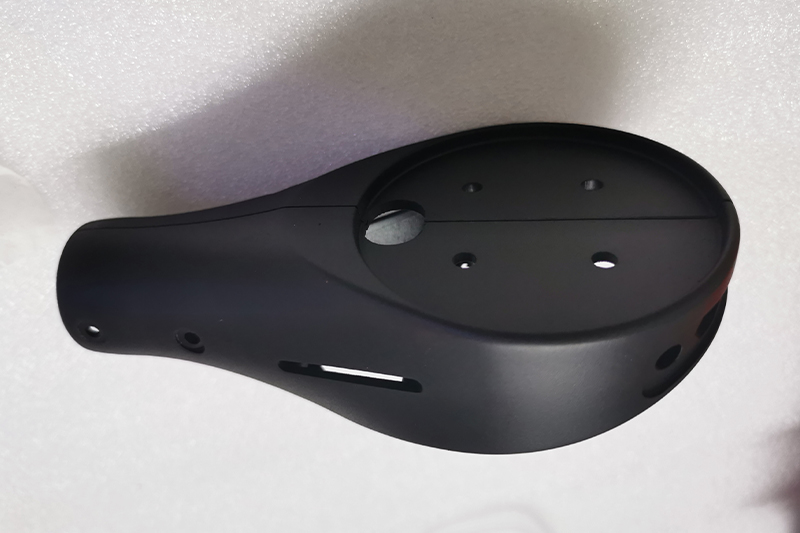
Polyurethane and Silicone Vacuum Casting Services

Trusted vacuum casting solution for prototypes and low-volume production components at competitive prices.


All your designs are secure and confidential

banner20

What is vacuum casting?

Vacuum casting or urethane casting or polyurethane and silicone vacuum spreading is a technology that incorporates silicone molds and a 3D printed master pattern to develop short-run, rigid parts with production-level top quality. The process solidifies polycarbonate polyurethane inside silicon or epoxy molds. The outcome is the vacuum cleaner spreading parts with the same shapes as the initial master models. The final measurements of the vacuum cleaner casting components will certainly depend upon the master version, part geometry, and the product chosen.

Vacuum Casting Advantages

Production-Quality-at-Low-Volumes

Production Quality at Low Volumes

This process is a fast, cost-efficient method to generate 10-200 units with production-level quality. Generally, each silicone mold will certainly create 20 spreadings.

Complex-Design

Complex Elastomeric Parts

Urethane spreading is excellent for prototyping elastomeric parts such as complex gaskets and over molds on rigid components.

Detail

High Level of Detail

Urethane spreading enables almost limitless intricacy, consisting of sharp inner edges unattainable with CNC machining, and styles without draft or consistent wall-thickness that can not be injection built.

Lead-time

Unmatched Lead Time

Up to 50 functional urethane components can be created in 10 to 15 days when you select vacuum cleaner casting.

Color

Flexible Color Options

Integrate various shade pigments to accomplish the intended results on your finished products.

Resin

Wide Selection Materials

Casting materials range from soft and adaptable to rigid and impact-resistant, along with colored and clear.

surface

Excellent Surface Finish

Urethane casting can supply much better surface structures compared with CNC prototyping or 3D printing.

low-cost

Low Cost Molds

The silicone molds are fairly low-cost tooling compared to injection molds and are simple to make changes.

Vacuum Casting Parts Gallery

Vacuum Casting Materials

Name

Description

Price

vacuum-casting-ABS-like-01

ABS-Like

Functional polyurethane plastic resin that is comparable to ABS thermoplastic. Difficult, rigid, and impact-resistant, it is suitable for various products.
Colors: All colors; precise pantone color matching available
Hardness: Shore D 78-82 Applications: General purpose, product enclosures

Browse Aluminum materials

vacuum-casting-PMMA-like

PMMA-Like

PMMA-Like, acrylic-like, is a rigid, clear polyurethane plastic that simulates acrylic (PMMA). This product is excellent for transparent applications such as light pipes. Colors: Clear Hardness: Shore D 87 Applications: Light pipes, see-through applications

Browse Aluminum materials

vacuum-casting-PC-like

PC-Like

Stiff, high-impact, and clear material with a wide variety of uses. Easy to device and finish, simulating polycarbonate.

Browse Aluminum materials

vacuum-casting-PP-like

PP-Like

Hard, adaptable, and abrasion-resistant urethane with inexpensive and polypropylene-like ductility.

Browse Aluminum materials

8-5

Rubber-Like

Polyurethane plastic resin, simulating rubber-like materials like TPU, TPE and silicone rubber.

Browse Aluminum materials

Vacuum Casting Application

Duplicated-parts

Low-Volume Production

Urethane cast parts are best for low-quantity production-- when volumes do not validate investment in shot mold tooling- in addition to for first-run manufacturing components, which can be completed weeks before manufacturing tooling is ready.

prototyping

Advanced Prototyping

The urethane spreading process and fairly economical tooling make it simple and affordable to make any kind of essential style changes. Additionally, various products can be made use of with the same mold, making it possible to evaluate designs with a selection of materials.

market

Market Testing

End-user functionality and a top-notch coating make urethane cast parts perfect for consumer screening, individual assessment, and principle designs. Utilizing the parts urethane process indicates that changes can be included swiftly for either further testing or market launch.

Vacuum Casting Process

Step 1: The Master Pattern

Patterns are 3D solids of your CAD layouts. They are usually made either by CNC machining or some form of 3D printing such as SLA. Note, nonetheless, that a pattern made from 3D printing will certainly not be quite the like the CNC counterpart, since the later procedure makes use of rounded cutting tools that can not make very limited span edges.

Vacuum-Casting-Master-Pattern

Step 2:Making the Molds

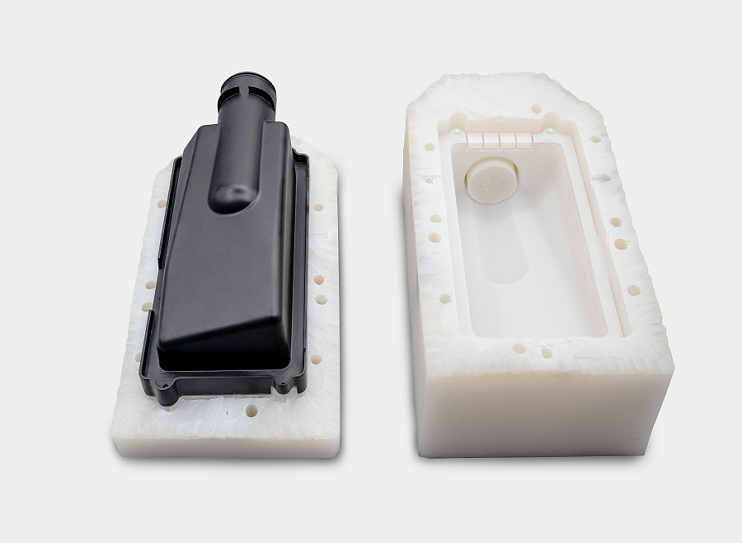
Casting molds are made from liquid silicone. This silicone is poured around the master pattern inside of a casting box, and after that permitted to be treated in an oven for 16 hours. As soon as dried out, the mold and mildew are reduced and the master is eliminated, leaving behind an empty cavity in the specific negative shape of the initial.

Vacuum-Casting-Making-Mold

Step 3:Casting Copies

Your selection of casting resins can currently be poured into the empty cavity to create an extremely exact copy of the original. It’s also possible to over-mold with 2 or even more products. Silicone molds are typically great for 20 or so duplicates of the master pattern.

Vacuum-Casting-Copies

Precision CNC Machining Tolerance

DescriptionInformation
Distance Dimensions0.2 – 0.4mm. Irregular or overly-thick geometries may cause deviances or deflection due to shrinkage.
Shrink MitigationA shrinkage rate of +0.15% can be expected due to thermal expansion of the liquid, and the response of the flexible mold.
Minimum Wall Thickness1.5mm-2.5mm
Quantities20-25 copies per mold
ColorColor and texture can be customized.
FinishesSurface finish is externally smoothed to a satin or matte surface. Grow lines may be present on internal or difficult-to-access features. Polishing or custom finishes must be clearly defined and agreed upon at the point of order.
Feature DefinitionSharp corners and text may appear slightly rounded.
Typical Lead TimeUp to 20 parts in 15 days or less.
 

Let's get your projects start together.